Violin Care 101: Daily, Weekly, and Termly Maintenance for Students
A practical guide to keeping your violin in top condition — covering daily habits, weekly checks, termly maintenance, storage tips, and common mistakes to avoid.
Why Violin Care Matters
A well-maintained violin sounds better, plays better, and lasts longer. Neglecting basic care doesn't just risk damage — it actively affects your child's progress. Dirty strings lose their resonance. A poorly maintained bow won't grip the strings properly. A bridge that's slowly warping will push the instrument out of its optimal setup. These things creep in gradually, and you might not notice until a teacher points out that the instrument isn't performing as it should.
The good news is that violin care isn't complicated. It's a set of simple habits that, once established, take very little time. For general instrument care advice, see our rental instrument care guide. This guide goes deeper into violin-specific maintenance.
Daily Care: After Every Practice Session
These steps should happen every single time your child finishes playing. They take about two minutes and make an enormous difference over time.
Wipe the Strings
Rosin builds up on the strings with every bow stroke. If it's not removed, it accumulates into a crusty layer that deadens the string's vibration and reduces sound quality. After playing, take a soft, dry cloth and pinch each string gently, running the cloth from the bridge to the fingerboard. It doesn't need to be thorough — just a quick wipe to remove the surface rosin.
Wipe the Body
Rosin dust also settles on the body of the violin, particularly on the top beneath the strings. Left over time, rosin bonds to the varnish and becomes extremely difficult to remove without risking damage to the finish. A quick wipe with a soft, lint-free cloth after each session prevents this buildup entirely.
Important: Use a separate cloth for the strings and the body. The cloth you use on the strings will pick up rosin residue, and you don't want to spread that across the varnish.
Loosen the Bow
After playing, loosen the bow by turning the screw at the end (the frog end) until the bow hair is slack but not hanging loosely from the stick. The bow should never be left tightened when not in use. A permanently tensioned bow will eventually lose its camber (the natural curve of the stick), which affects its playing characteristics and can be expensive to correct.
How loose? The hair should be visibly relaxed — you should see the natural curve of the stick returning. Don't loosen it so much that the hair droops away from the stick.
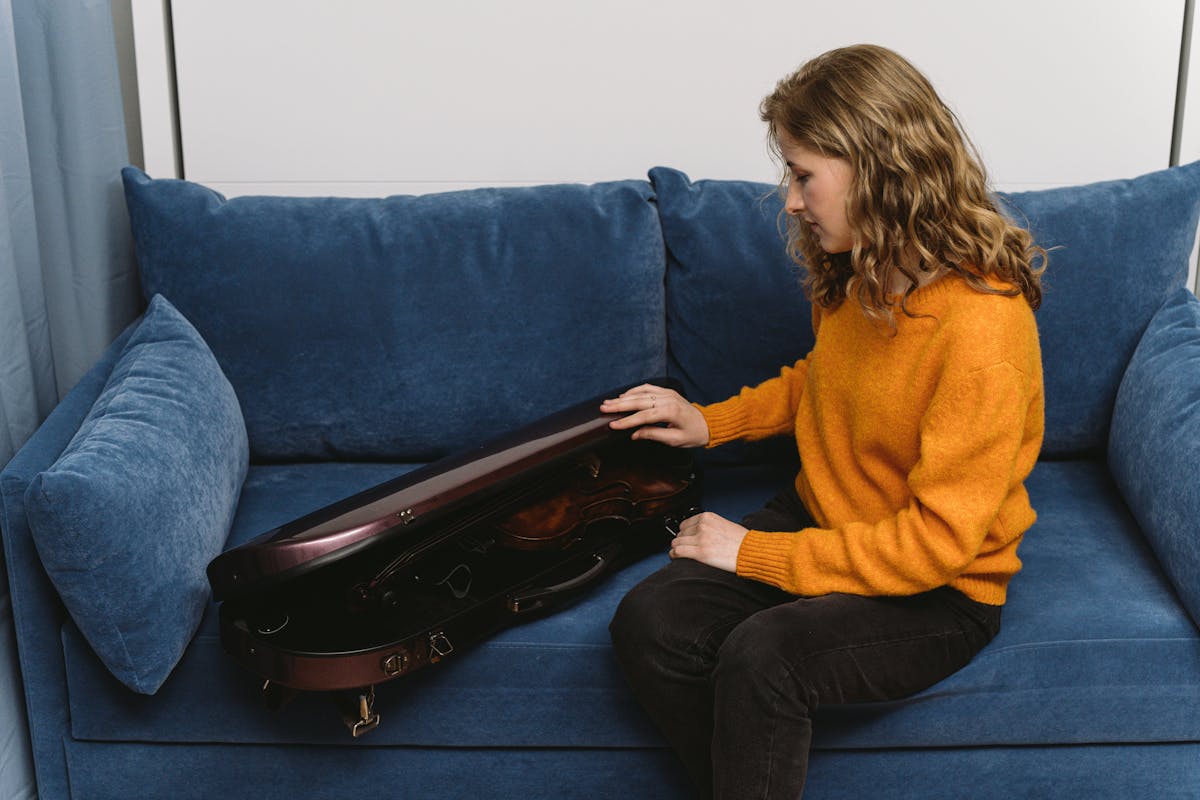
Put It Back in the Case
Every time, without exception. The case protects the violin from bumps, temperature changes, humidity fluctuations, pets, siblings, and all the other hazards of daily life. Leaving a violin on a table, a bed, or a music stand — even "just for a minute" — is how accidental damage happens.
Weekly Care: A Quick Check
Once a week, take five minutes to check a few things. Your child can learn to do most of these themselves with a little guidance.
Check the Bridge Position
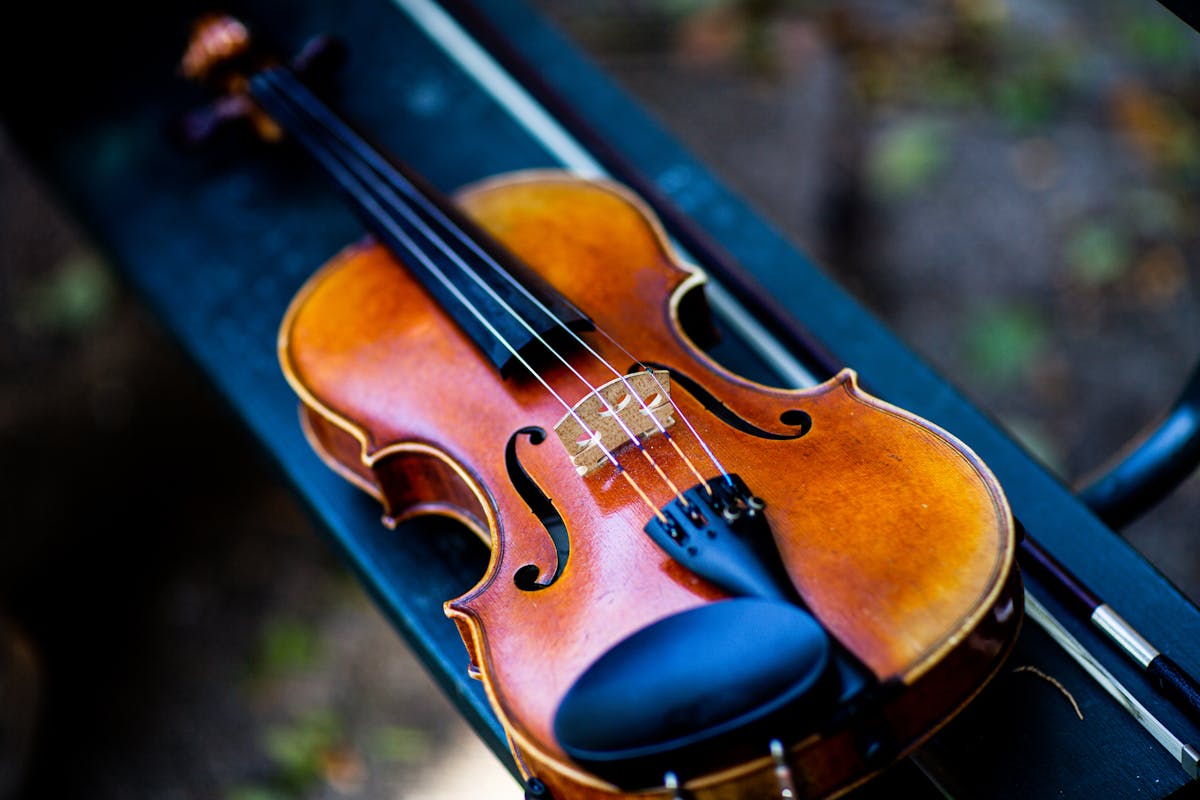
The bridge — the small wooden piece that holds the strings up — is not glued to the violin. It's held in place solely by the tension of the strings. Over time, the pressure of tuning can cause the bridge to lean forward (toward the fingerboard). If this isn't corrected, the bridge can warp permanently or, in extreme cases, fall over — which is alarming but rarely causes damage.
Check weekly that the bridge is standing straight and upright, perpendicular to the top of the violin. The back of the bridge (the side facing the tailpiece) should be at a right angle to the body. If it's leaning forward, your child's teacher can show you how to gently ease it back. If you're not confident doing this yourself, bring it up at the next lesson.
Check the Strings
Look at each string for signs of wear: fraying, discolouration, or visible unravelling of the winding (on the lower strings). Worn strings sound dull and are harder to tune. They can also break unexpectedly, which is startling during practice and potentially disruptive during a lesson or performance.
Clean the Fingerboard
The fingerboard accumulates oils and grime from your child's fingers over time. Once a week, wipe it down with a dry cloth. If there's a visible buildup of grime, a cloth very slightly dampened with water (not soaking wet) can help. Never use household cleaners or solvents on any part of the violin.
Inspect the Bow Hair
Check the bow hair for broken strands. A few broken hairs are normal — just carefully snip them off at the point where they attach to the bow, rather than pulling them out (pulling can loosen the plug that holds the hair in place). If the hair is thinning noticeably, losing its grip, or looking discoloured and worn, it's approaching time for a rehair.
Termly Care: Seasonal Maintenance
At the start or end of each school term, it's worth doing a more thorough check and considering whether any maintenance is needed.
Consider New Strings
Violin strings don't last forever. Even if they haven't broken, they gradually lose their tonal quality and responsiveness. Most student players should change strings every six to twelve months, depending on how often they play. More advanced players who practise daily may need fresh strings every three to four months.
Signs that strings need replacing:
- The sound is noticeably duller than when the strings were new.
- The strings are harder to tune and don't hold their pitch as well.
- There are visible signs of wear — fraying, discolouration, or flat spots where the fingers regularly press.
- The winding on the lower strings (G and D) is starting to unravel.
If you're renting from Prelude and you're unsure whether the strings need changing, get in touch and we can advise.
Bow Rehair
Bow hair wears out with use. The tiny barbs on the horsehair that grip the strings gradually smooth out, meaning you need more rosin for the same grip. Most student bows benefit from a rehair once or twice a year. Signs it's needed: the bow doesn't grip even with fresh rosin, the sound is thin or scratchy despite good technique, the hair has thinned noticeably, or it looks grey and discoloured.
General Instrument Check
Give the violin a careful visual inspection each term:
- Open seams: Run your finger along the edges where the top and back meet the ribs. A slight gap or buzz when playing means a seam may be opening — common and easy to fix, but needs a luthier.
- Cracks: Check the top, back, and ribs for hairline cracks, particularly near the f-holes. Cracks need professional attention promptly.
- Peg function: Pegs should turn smoothly and hold their position. Slipping or sticking pegs can be adjusted with peg compound.
- Fittings: Check that the chin rest and shoulder rest are secure and comfortable.
Storage and Environment
Proper storage goes beyond simply putting the violin back in its case. The environment matters too.
- Avoid temperature extremes. Never leave a violin in a car, near a heater, in direct sunlight, or in an uninsulated garage. Rapid temperature changes can crack wood and loosen glue joints.
- Mind the humidity. New Zealand's humidity varies with both region and season. Wooden instruments are sensitive to very dry conditions (which can cause cracking) and very humid conditions (which can cause swelling and tonal changes). If your home gets very dry in winter — particularly if you use a heat pump or wood burner — consider a small case humidifier. Your child's teacher can advise on whether this is necessary for your area.
- Store the case on a flat, stable surface — ideally not on the floor where it could be kicked or stepped on, and not up high where it could fall.
Common Mistakes to Avoid
- Using household cleaning products. Furniture polish, window cleaner, and other household products will damage the varnish. Only use products specifically designed for violins, or simply a dry cloth.
- Touching the bow hair. The oils from skin coat the hair and prevent it from gripping the strings. Teach your child to handle the bow only by the stick and frog, never the hair.
- Over-rosining. Many students apply far too much rosin. A few steady strokes up and down the bow hair before playing is enough. Excess rosin creates a harsh, scratchy tone and accelerates buildup on the strings and body.
- Leaving the bow tightened. This warps the stick over time and will eventually require professional correction or replacement.
- Attempting DIY repairs. Violins look simple but are precision instruments. Even minor repairs — adjusting the sound post, regluing a seam, fitting a bridge — require specialist tools and expertise. Well-intentioned home repairs almost always make things worse.
Building the Routine
The key to good violin care is consistency. If your child does the daily steps every time they practise and you keep an eye on the weekly and termly maintenance, the violin will stay in excellent condition. Make the daily care part of the practice routine — as natural as washing hands before a meal.
If you have any questions about violin care or maintenance, get in touch with us. We're always happy to help.