Clarinet vs Flute vs Saxophone: Which Woodwind Should Your Child Play?
Comparing the three most popular school woodwinds side by side. We cover physical requirements, difficulty curves, costs, and which instrument suits different kids — so you can make a confident choice.
The Woodwind Decision
Your child has come home from school buzzing about joining the band, and now you need to help them pick a woodwind instrument. For most New Zealand families, the choice comes down to three options: clarinet, flute, or saxophone. They're the most commonly taught woodwinds in school band programmes, there are itinerant teachers available for all three, and they're all realistic starting instruments for kids from around Year 5 or 6.
But they're quite different from each other — in how they feel to play, how they sound, and what they demand physically. This guide walks you through the practical differences so you and your child can make a choice that actually sticks.
Quick Comparison
| Clarinet | Flute | Saxophone | |
|---|---|---|---|
| Typical starting age | Year 5 (age 9-10) | Year 5 (age 9-10) | Year 5-6 (age 9-11) |
| Weight | Light (~800g) | Very light (~450g) | Moderate (alto ~2.5kg with strap) |
| Physical demand | Finger reach, steady air | Arm position, precise airstream | Neck/shoulder support, larger hands helpful |
| Difficulty to start | Moderate | Moderate-hard (getting first sound) | Easier (first sounds come quickly) |
| Volume | Moderate | Quieter | Loud |
| Uses reeds? | Yes (single reed) | No | Yes (single reed) |
| Role in school band | Melody and harmony | Melody (often lead) | Melody, harmony, solo |
| Rental cost | $ | $ | $$ |
Clarinet — The Versatile All-Rounder
Who it suits
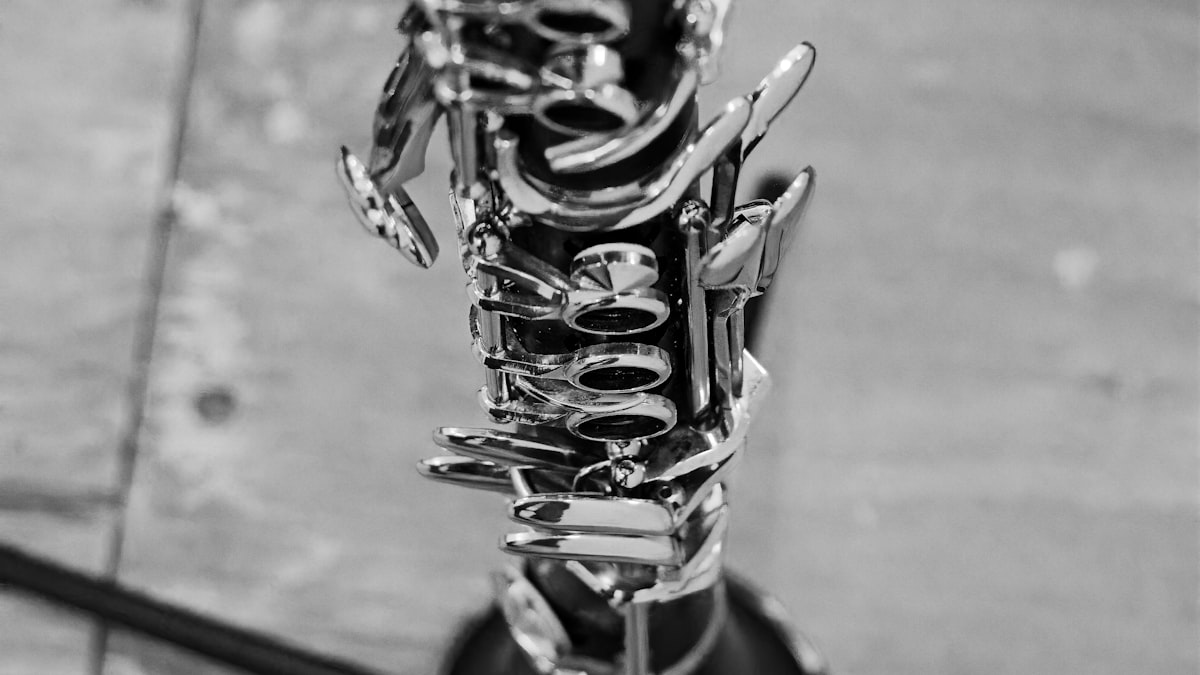
The clarinet is arguably the most versatile woodwind. It has a warm, rich tone that works in concert bands, orchestras, jazz combos, and even folk music. If your child isn't sure what style of music they'll gravitate towards, the clarinet keeps every door open.
Physical requirements
Your child needs enough finger span to cover the tone holes — most kids can manage this by age 9 or 10. The clarinet uses a single reed and mouthpiece, which means learning an embouchure (the way you shape your mouth around the mouthpiece). It takes a few weeks to develop, but most children get comfortable reasonably quickly. The instrument itself is light and held in front of the body, so posture is straightforward.
The learning curve
The clarinet has a reputation as a steady, rewarding learner. Your child will likely produce a decent sound within the first few lessons, though there's a well-known "break" in the middle register where fingerings become trickier. Getting past this takes patience, usually a few months in. After that, progress tends to be smooth and satisfying.
Things to know
- Reeds are an ongoing cost (a few dollars each, replaced every few weeks), but they're inexpensive.
- The Bb clarinet is the standard school instrument — that's what you'll be renting.
- Clarinets are popular in school bands, so your child will have plenty of company and won't struggle to find a part.
Flute — Bright, Elegant, and Portable
Who it suits
The flute appeals to kids who are drawn to its bright, clear sound. It's the lightest of the three, fits easily into a school bag, and doesn't require reeds — which means no ongoing consumable costs beyond the occasional cleaning cloth.
Physical requirements
Here's the honest bit: the flute can be the hardest of the three to get a sound out of initially. Your child blows across the embouchure hole (think blowing across the top of a bottle), and it takes practice to find the right angle and airspeed. Some kids get it in minutes; others take a couple of weeks of persistence. Neither is a sign of long-term success or failure — it's just how the flute works.
The flute is held out to the right side, which can feel awkward at first. Smaller children sometimes find this tiring until their arms strengthen. If your child is on the smaller side, ask their teacher about curved headjoints, which bring the instrument closer to the body.
The learning curve
Once your child can produce a reliable sound, progress on the flute tends to be quite quick. The fingerings are logical, the instrument responds well, and the flute section in most school bands gets satisfying melodic parts. Flautists are in steady demand.
Things to know
- No reeds to buy — the flute is the most economical woodwind to maintain.
- It's the quietest of the three, which your household may appreciate during practice time.
- The flute is very portable and robust in its case.
Saxophone — Bold Sound, Quick Start
Who it suits
The saxophone is the instrument that sells itself. Kids hear it and want to play it — it has a cool factor that the clarinet and flute can't quite match. It's the go-to for jazz, and it sounds fantastic in concert bands too. If your child is motivated by the sound, that enthusiasm is worth a lot.
Physical requirements
The alto saxophone is the standard starter instrument, and it's the heaviest of the three woodwinds here. It hangs from a neck strap, so the weight sits on your child's neck and shoulders rather than their hands. Most kids from about age 10 manage fine, but if your child is particularly small for their age, it's worth having them try one on before committing.
The saxophone uses a single reed and mouthpiece similar to the clarinet. In fact, the embouchure is very similar, and many students find it easier to produce a sound on the saxophone than on the clarinet or flute. First sounds often come within the first lesson.
The learning curve
The saxophone is often described as the easiest woodwind to start — and there's truth to that. Early progress is quick and encouraging. The fingerings are intuitive, the sound is immediate, and kids tend to feel like they're "really playing" quite early on. The challenge comes later, with tone control, tuning, and more advanced techniques.
Things to know
- Saxophones are louder than clarinets and flutes. If thin walls are a feature of your home, this is worth considering.
- Reeds are the same type as clarinet reeds (single reed), though saxophone reeds are larger and slightly more expensive.
- Rental costs are typically higher than clarinet or flute because the instrument itself costs more to manufacture.
- Some school bands have limited saxophone spots — check with your child's school before committing.
View our full instrument range
Which One Should Your Child Play?
There's no single right answer, but these guidelines help narrow it down:
- Your child is small or young (Year 4-5): The flute or clarinet are physically easier to handle. Consider the flute if arm position isn't an issue, or the clarinet if your child prefers a warmer sound.
- Your child wants quick results: The saxophone delivers the most immediate gratification. If motivation is a concern, this matters.
- Your child is drawn to a specific sound: Let them listen to recordings of all three. The instrument they're most excited about is usually the right one — enthusiasm carries kids through the tough early weeks.
- The school band needs specific instruments: Check with the band director. Many schools are short on clarinets and flutes but have plenty of saxophonists. Playing what the band needs means your child gets better parts and more attention from the teacher.
- You want the most versatile option: The clarinet transitions well into orchestral, jazz, and chamber music. It's also the most natural stepping stone to other woodwinds later.
- Noise is a concern: The flute is the quietest by a good margin. The saxophone is the loudest.
Cost Comparison
Rental costs for clarinets and flutes are similar and sit at the lower end of the woodwind range. Saxophones cost more to rent because the instruments themselves are more expensive. The difference isn't dramatic — often just a few dollars per week — but over a year it adds up.
Flutes have the lowest ongoing costs because there are no reeds to replace. Clarinets and saxophones both need reeds, which is a small but recurring expense (budget roughly $5-10 per month for a beginner).
For a full breakdown of what instrument hire costs in New Zealand, see our instrument hire cost guide.
Getting Started
Once you've narrowed it down, the best next step is to let your child try the instrument. Many school band programmes include a trial session where kids can handle different instruments and see what feels right. If your school doesn't offer this, a local music teacher can usually arrange a short trial lesson.
When you're ready to go, renting is the smartest way to start. It keeps costs manageable, and if your child decides to switch instruments after a term or two (which is completely normal), you're not stuck with an expensive purchase.
Browse our instruments to see what's available, or read our complete guide to choosing the right instrument for more advice on matching instruments to your child.