Trumpet vs Trombone: Choosing a Brass Instrument for School Band
Trumpet or trombone? We compare the two most common school brass instruments — physical demands, difficulty, roles in band, and costs — so you can help your child choose the right one.
Brass for Beginners
If your child is interested in brass, the choice usually comes down to trumpet or trombone. They're the two most commonly offered brass instruments in New Zealand school bands, with the most teachers available and the most ensemble opportunities. Other brass instruments exist — the French horn, tuba, and euphonium — but trumpet and trombone are where most young brass players start.
Despite both being brass, they're quite different instruments. One uses valves, the other uses a slide. They sound different, they sit in different parts of the band, and they suit different physical builds. Here's what you need to know.
Quick Comparison
| Trumpet | Trombone | |
|---|---|---|
| Typical starting age | Year 5 (age 9-10) | Year 5-6 (age 9-11) |
| How it works | 3 valves (buttons) | Slide (7 positions) |
| Weight | ~1kg | ~1.3kg (but longer reach needed) |
| Sound | Bright, piercing, powerful | Rich, warm, bold |
| Physical demand | Lip strength, breath control | Arm length, lip strength, breath control |
| Difficulty to start | Moderate (embouchure is the hurdle) | Moderate (embouchure + slide accuracy) |
| Volume | Loud | Very loud |
| Role in band | Melody, fanfares, lead lines | Harmony, bass lines, power |
| Rental cost | $ | $-$$ |
Trumpet — Bright, Bold, and Front-and-Centre
Who it suits
The trumpet is the lead voice of the brass section. It plays the melodies, the fanfares, and the parts that cut through everything else in the band. Kids who like being heard, who enjoy being at the front of the action, and who have a competitive streak often gravitate towards the trumpet. It's the most popular brass instrument for a reason.
Physical requirements
The trumpet is held with both hands in front of the body, and your child presses three valves to change notes. Physically, it's one of the more accessible instruments — it's compact, relatively light, and the hand position is comfortable for most children.
The real physical challenge is the embouchure. To play any brass instrument, your child buzzes their lips into the mouthpiece and uses air pressure to produce sound. This takes practice. The trumpet mouthpiece is small, which means the lip muscles need to be precise. Most kids can produce a sound in the first lesson, but developing the range and endurance to play full pieces takes weeks of regular practice.
The learning curve
The trumpet rewards consistent practice. Early progress is satisfying — your child will be playing simple tunes within a few weeks. The valve system is straightforward (there are only three valves, and the fingerings are logical). The ongoing challenge is developing range (playing higher notes), which requires lip strength that builds gradually over months.
Things to know
- Trumpets are loud. There's no quiet way to practice trumpet. If you live in a flat or terraced house, this is worth considering.
- The trumpet section in school bands is usually the largest brass section, which means there's some competition for the best parts.
- Trumpet skills transfer well to cornet (used in brass bands) and flugelhorn.
- No reeds or consumables — just valve oil, which lasts ages.
Trombone — Powerful, Distinctive, and In Demand
Who it suits
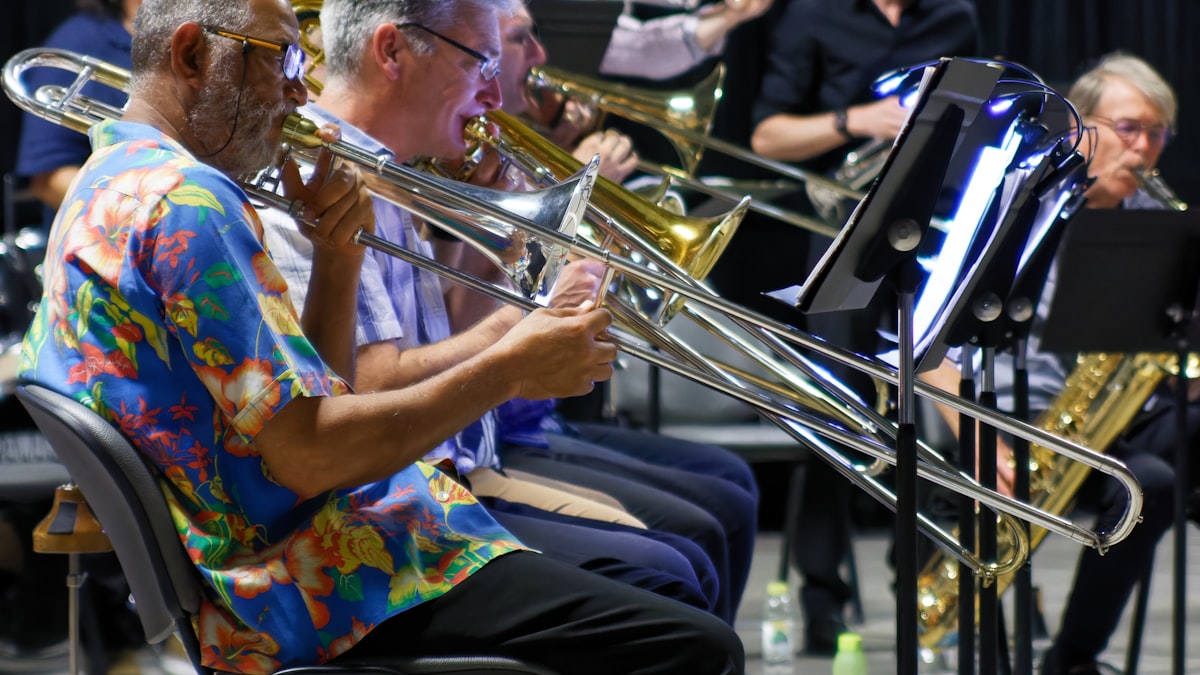
The trombone has a unique appeal. It's the only common band instrument that uses a slide instead of valves or keys, which gives it a distinctive sound and a sense of physicality that many kids love. If your child likes doing things differently, enjoys big sounds, and has a bit of natural showmanship, the trombone could be a great fit.
Physical requirements
Here's the main physical consideration: arm length. The trombone slide has seven positions, and the furthest positions require your child to fully extend their right arm. Younger or smaller children can sometimes struggle to reach the outer positions (6th and 7th). A good rule of thumb is that if your child can comfortably reach out and touch a wall with their arm extended while holding the instrument, they'll manage fine. Most children from around Year 5-6 have the arm length needed.
Like the trumpet, the trombone requires a buzzing embouchure. The trombone mouthpiece is larger than the trumpet's, which many beginners find a little easier to produce a sound on — there's more room for the lips to vibrate. However, the larger mouthpiece also means more air is needed, so lung capacity matters. Again, this develops naturally with practice.
The learning curve
The trombone has a unique challenge: slide accuracy. Unlike valves (which are either pressed or not), the slide can be placed anywhere — and being even slightly off means playing out of tune. Your child needs to develop a good ear and muscle memory for each slide position. This takes time, but it also develops excellent musicianship. Trombonists tend to have outstanding pitch awareness.
Things to know
- Trombones are bulkier than trumpets. The slide is long and the case is large. Your child will need a bit more space in the car and at home.
- School bands almost always need more trombonists. Your child will be in demand from day one, which often means better parts and more solo opportunities.
- The trombone is featured prominently in jazz, which appeals to many older students.
- Maintenance is minimal — slide cream or oil, and that's about it.
A Brief Note on French Horn
If your child is musically curious and likes a challenge, the French horn is worth mentioning. It has a gorgeous, round tone and is essential in orchestras. However, it's significantly harder to play than trumpet or trombone — the mouthpiece is tiny, the partials are close together (meaning small changes in lip tension produce different notes), and it demands excellent pitch control from the start.
Most French horn players start on trumpet or another brass instrument first and switch later, often around Year 8 or 9. It's not a common starting instrument, but if your child shows strong aptitude and a good ear, it's a rewarding path. Ask your school's band director if French horn is available.
Which One Should Your Child Play?
Here's how to narrow it down:
- Your child has shorter arms or is small for their age: The trumpet is the safer choice. They won't have any reach issues, and they can always switch to trombone later if they want to.
- Your child loves melody and wants to be heard: Trumpet. It gets the lead lines, the solos, and the spotlight moments.
- Your child likes being different and values being needed: Trombone. School bands are almost always short on trombonists, which means your child will get more attention, better parts, and be valued from the start.
- Your child is physical and likes big gestures: The trombone's slide action appeals to kids who like the physicality of making music. It's a more active, full-body experience.
- Your child has a good ear for pitch: They'll do well on trombone, where accurate pitch is essential. The trumpet is more forgiving in this regard because the valves "lock in" the note positions.
- The school band needs specific instruments: Always check. If the band is overloaded with trumpets and has no trombonists, your child will have a much better experience on trombone.
Cost Comparison
Trumpet and trombone rental costs are fairly similar. Trumpets are slightly less expensive in most cases, but the difference is modest — typically just a few dollars per week. Neither instrument has significant ongoing consumable costs: no reeds, no strings. Just a small bottle of valve oil or slide lubricant that lasts months.
Both instruments are robust and stand up well to the handling they get from school-aged children. Dents happen (brass is soft metal), but they rarely affect playability. For a complete picture of rental costs, see our instrument hire cost guide.
Getting Started
The single best thing you can do before committing is let your child try both instruments. Most school band programmes include a brass taster session at the start of the year. If that's not available, a local brass teacher can usually let your child have a blow on both and see which one clicks.
Pay attention to which instrument your child produces a better sound on — some lips naturally suit the smaller trumpet mouthpiece, while others take to the larger trombone mouthpiece more easily. It's a subtle thing, but a good teacher will spot it.
Renting is the smart way to start with brass. The instruments are durable, the costs are reasonable, and if your child wants to switch between trumpet and trombone (or branch out to French horn later), renting keeps your options open.
Browse our brass instruments to see what's available, or visit our teacher directory to find a brass teacher near you. For more general advice, read our complete guide to choosing the right instrument.