Beginner's Guide to Drums and Percussion for NZ Kids
Everything you need to know about starting your child on drums in New Zealand — what type of kit to begin with, the best age to start, managing noise at home, and what those first exciting months look like.
What Are Drums and Percussion?
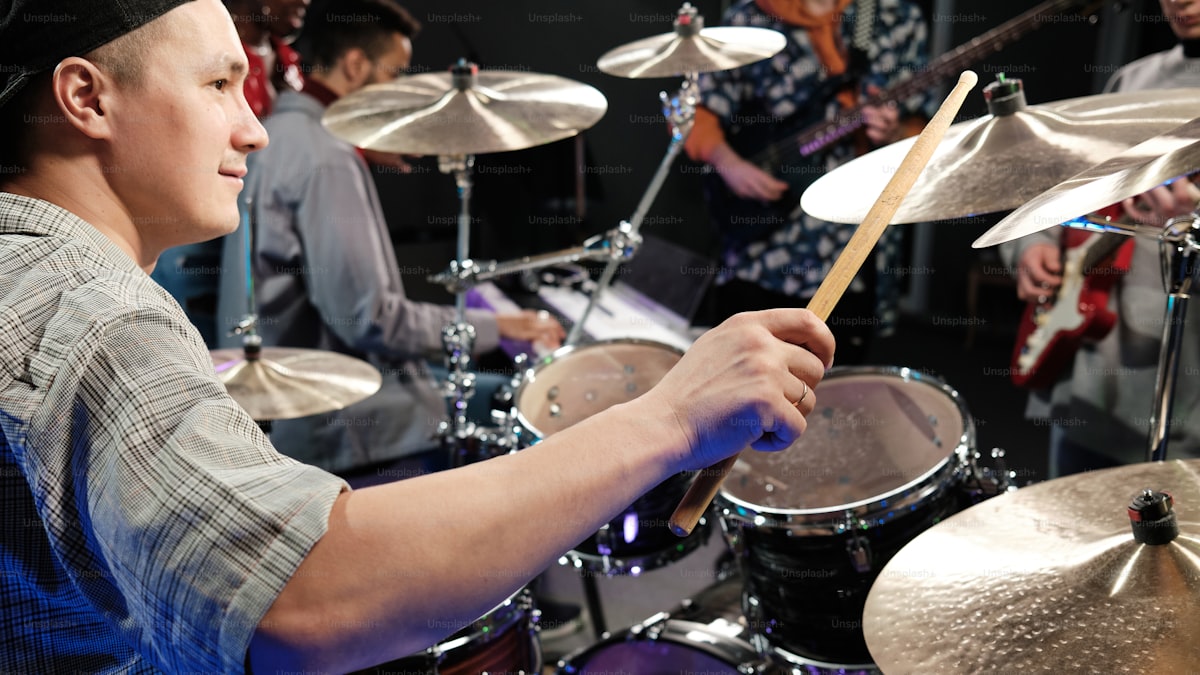
Drums and percussion cover a wide family of instruments — from the drum kit you see on stage to the snare drum in a concert band, from timpani in an orchestra to the auxiliary percussion table loaded with triangles, woodblocks, and cymbals. For most children starting out, "drums" means one of two things: a snare drum kit for concert band, or a full drum kit for rock, pop, and jazz.
Drums are the heartbeat of music. They provide the rhythm and groove that everyone else plays along to. Children who are drawn to drums tend to be energetic, rhythmically aware, and often the ones tapping on every available surface. If that sounds like your child, they're a natural candidate.
What Age Can My Child Start?
Children can start basic percussion from a surprisingly young age — rhythm games and simple hand percussion work well from age four or five. For the snare drum (the standard entry point for school band percussion), most children start between ages eight and eleven, which aligns with intermediate school band programmes across New Zealand.
For a full drum kit, age ten or eleven is a common starting point. The kit requires coordination of all four limbs working independently — two hands and two feet — which demands a level of motor development that most children reach around this age.
Key physical considerations:
- Coordination — Can your child pat their head and rub their stomach? That's roughly the type of independence drums require. It develops with practice, but a baseline helps.
- Size — For a standard drum kit, your child needs to reach the pedals comfortably while seated. Junior kits are available for smaller players.
- Focus — Drumming looks like pure energy from the outside, but it requires intense concentration to maintain steady tempo and play the right patterns at the right time.
What Does My Child Need to Get Started?
The starting setup depends on whether your child is joining a school band or learning drum kit:
For School Band (Snare/Percussion)
- A snare drum with stand — The primary practice and performance instrument for school concert band percussion.
- Drumsticks — Standard 5A sticks are the typical starting point.
- A practice pad — A rubber pad that simulates the feel of a drum head without the volume. Invaluable for practising rudiments at home without the noise.
- A stick bag — For carrying sticks and mallets to school.
For Drum Kit
- An electronic drum kit or acoustic kit — Electronic kits have volume control and headphone outputs, making them vastly more practical for home practice. Acoustic kits sound better but are very loud.
- A drum throne — The round, adjustable seat. Correct height matters for technique and comfort.
- Drumsticks — Same 5A sticks work for kit playing.
- Headphones — For electronic kits, a decent pair of headphones makes practice enjoyable.
Prelude drum rentals cover snare drum packages for concert band students. Check our drums catalogue for the specific options available.
The First Few Months
Drums have one of the most exciting beginner experiences of any instrument. Your child will be playing a basic beat within the first lesson or two. There's no waiting to produce a sound, no embouchure to develop, no sore fingers — you hit the drum and it makes a satisfying noise immediately. This instant gratification is wonderful for motivation.
The first month focuses on stick technique (how to hold and strike), basic rhythms, and reading simple rhythm notation. Most beginners can play a steady beat and a few basic patterns by the end of week two.
By month two, snare drum students will be working on rudiments — specific sticking patterns (like paradiddles and flams) that form the vocabulary of percussion. Kit students will be playing basic rock beats with hands and feet together. By three months, your child will likely be playing along to simple songs and developing real independence between their limbs.
Reading Music for Drums
Drum notation is different from pitched instruments — it shows rhythm and which drum to hit rather than which note to play. Many children find drum notation easier to read than standard notation because it focuses purely on rhythm. That said, school band percussionists eventually learn tuned percussion too (xylophone, glockenspiel), which does require reading pitched notation.
Common Concerns
"Won't it be incredibly loud?"
This is the number one concern for every drum parent, and it's legitimate. An acoustic drum kit is loud — genuinely loud. The practical solutions are: an electronic kit with headphones for home practice (this is what most families do), a practice pad for developing technique silently, or designating practice times that work for the household and neighbours. Many NZ families with keen drummers invest in an electronic kit specifically for the volume control.
"Are drums a 'real' instrument?"
Absolutely. This question comes up more often than it should. Drums are technically demanding, musically essential, and require a sophisticated understanding of rhythm, dynamics, and ensemble playing. Percussion is a fully supported NCEA performance instrument, and percussionists who read music well and understand tuned percussion (marimba, vibraphone, timpani) are highly valued in orchestral and band settings.
"Is it just banging?"
In the same way that piano is "just pressing keys." Good drumming requires precise control, musical sensitivity, and the ability to listen to and support other musicians. The difference between a beginner and an experienced drummer is night and day — and your child's teacher will develop musicality from the very first lesson.
"Will they be able to play in school groups?"
Yes, and they'll be in demand. Every concert band needs a percussion section, every jazz band needs a drum kit player, and every school production needs a drummer. School percussion sections are often smaller than other sections, so your child will have plenty of playing opportunities. Many NZ schools are actively looking for committed percussionists.
How Much Does It Cost?
Snare drum rental packages are generally affordable and comparable to smaller instruments. Full drum kit rental is at the higher end, reflecting the size and number of components. Ongoing costs are minimal — drumsticks break occasionally and need replacing (they're inexpensive), and drum heads last a long time with normal student use. No reeds, no strings, no valve oil. For specific pricing, visit our instrument hire cost guide.
Getting Started
Drums are an exhilarating instrument to learn. They channel energy into discipline, they develop coordination that benefits every area of life, and they make your child the rhythmic foundation that every band needs. If your child has been tapping on tables since they could sit up, take the hint.
Browse our drums catalogue to see what's available, read our guide to choosing the right instrument if you're still exploring options, or find a percussion teacher through our teacher directory.