Beginner's Guide to the Cello for NZ Kids
Thinking about the cello for your child? Here's what to expect — starting ages, sizing, what the first few months look like, costs, and why the cello is such a rewarding instrument to learn.
What Is the Cello?
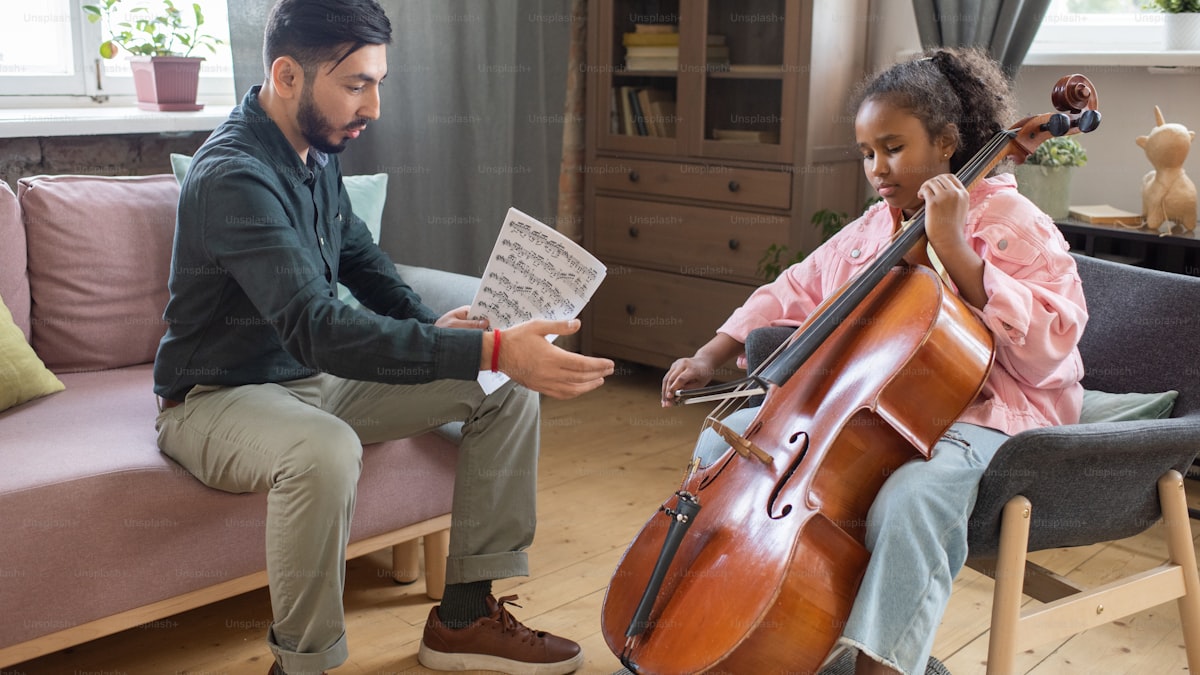
The cello is the rich, warm voice of the string family. It sits between the violin and the double bass in size and pitch, and its tone is often described as the closest instrument to the human voice. Children play it sitting down, with the instrument resting on a spike (called an endpin) between their knees.
The cello is wonderfully versatile. It's a core instrument in school orchestras, but it also works beautifully as a solo instrument and has found its way into folk, pop, and film music. Kids are often drawn to its deep, resonant sound — there's something immediately satisfying about the way it vibrates against your body when you play.
What Age Can My Child Start?
Children can start the cello from around age five, thanks to fractional sizing. Cellos come in sizes from 1/8 through to full size (4/4), with the most common starting sizes being 1/4 for young children and 1/2 for slightly older beginners. Most children begin between ages six and nine.
The physical requirements are a little different from violin. Your child needs to be able to sit comfortably with the cello positioned between their knees, and their left hand needs to reach around the neck. Because the cello is played in a seated position with a natural arm posture, many children actually find it more physically comfortable than the violin.
Our cello sizing guide explains how to measure your child and match them to the right size instrument.
What Does My Child Need to Get Started?
A beginner cello setup includes:
- A correctly sized cello — Getting the size right is essential for comfort and technique development.
- A bow — Cello bows are shorter and thicker than violin bows, designed for the heavier strings.
- Rosin — Cello rosin is softer and stickier than violin rosin. They're not interchangeable.
- A case or bag — Cellos are large instruments, and a padded case or gig bag is important for safe transport.
- A rock stop — A small rubber disc that prevents the endpin from sliding on smooth floors. Essential for practice at home and school.
Prelude cello rentals come with the bow, rosin, and case included, so your child is ready to play from day one.
The First Few Months
The cello is more forgiving than the violin in the early stages. Because the strings are thicker and the instrument is larger, beginners tend to produce a fuller, warmer tone more quickly. That said, playing in tune still takes time and practice — there are no frets to guide finger placement.
In the first month, your child will learn how to hold the bow, how to produce a clear sound on each string, and basic left-hand finger positioning. By the end of month two, they'll typically be playing simple melodies. By three months, most students are working on short pieces with some musical expression.
Practice for young beginners should be around 15 minutes a day. The cello is physically engaging — your child uses their whole upper body — so shorter sessions prevent fatigue. As they get older and more experienced, practice time naturally increases.
The Transport Question
Let's address the elephant in the room: cellos are big. Transporting a cello to school and lessons is more involved than slipping a violin into a backpack. Most cello cases have backpack straps, and children manage well once they get used to it. If your child takes the school bus, check that there's room. Many NZ school orchestras have practice rooms where instruments can be stored during the week.
Common Concerns
"Isn't a cello too big for my child?"
Fractional sizing solves this. A 1/4 size cello is surprisingly compact, and a 1/2 size cello is manageable for most primary school children. The key is getting the right size — a properly fitted cello should feel comfortable, not overwhelming. Your child's teacher or our sizing guide can help you get this right.
"Will it disturb the neighbours?"
The cello is one of the more neighbour-friendly instruments. It's rich and resonant but not piercing. It doesn't have the volume of a trumpet or the high-frequency carry of a violin. Most families find that cello practice blends into household noise rather than cutting through it.
"It seems like a niche instrument — will they get to play with others?"
Quite the opposite. Cellists are in high demand in school orchestras and youth ensembles across New Zealand. There are always fewer cellists than violinists, which means your child will find it easy to get a spot in school and community groups. As they progress, opportunities for chamber music, NCEA performance, and youth orchestras open up.
"What if they want to switch instruments later?"
The skills learned on the cello — reading bass clef, bow technique, ear training, and musical expression — transfer well to other string instruments. And renting means you haven't invested thousands in an instrument that's no longer needed.
How Much Does It Cost?
Cello rentals are typically a bit more than violin rentals, reflecting the larger size of the instrument. Longer rental plans offer significant savings over monthly rates. For a detailed breakdown of what to expect, see our instrument hire cost guide.
Ongoing costs are modest. Replacement strings are needed occasionally (less often than violin — cello strings last longer), and rosin needs replacing roughly once a year. There are no reeds or other consumables to worry about.
Getting Started
The cello is an exceptional instrument for children — it's deeply rewarding, in high demand, and more physically natural than many people expect. If your child is drawn to its sound, trust that instinct.
Have a look at our cello catalogue to see available instruments, use our cello sizing guide to find the right fit, or read our guide to choosing the right instrument if you're still deciding. Our teacher directory can help you find a cello teacher in your area.